I wasn’t going to post another Irritated Review™ so soon, but I was reading a Regency Romance novella and I couldn’t restrain myself. I’ll refrain from naming book or author, but going by the author picture, she’s young.
The problems come in two particular flavors: errors of fact and behavior for the period, and modern points of view projected into the past.
Normally I object to these sorts of problems because they throw me out of a book, sometimes violently. In this case, they were so numerous that it was like trying to make out the plot while facing a hail of bullets, one after another. Soon I was no longer reading for the story, but looking for the next blooper, like a game. Here are some of the highlights.
Misused words
There is only the haziest understanding of how a visitor to a town is housed, and it’s not in a guesthouse, the term chosen by the author, which does not exist. Inns in villages and hotels in towns are actually what she meant, but other than one reference to lodgings, we keep reading about the guesthouse.
There are waistcoats which are portly (rather than the men wearing them), and brows on ships, where men can stand.
Men want to step onto the “Regent’s British soil.” “Regent” is not a synonym for “king” — do you suppose we should be singing “God Save the Regent”? Later there’s a reference to “now that the Regent sat the throne.” Thrones are the seats of anointed kings, not regents, even if they are princes as in this case.
The management of households
The rank of the heroine is never declared, but she is subject to an arranged marriage to the 5th son of a Duke and her parents were the wealthiest in the town, so she must be a member of the lower reaches of the aristocracy, if not higher. Her house is (sketchily) described in matching fashion — it’s at least large and well-appointed, though envisioned more as a townhouse than an estate.
And apparently the house has not one single servant.
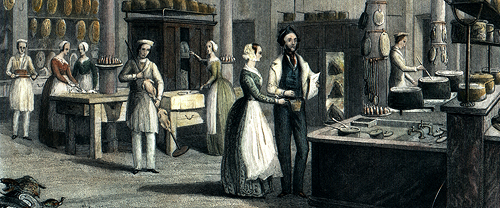 No one to bring tea, no one to dust all the furniture, no one to answer the door when someone knocks, no maid to help her dress, no cook, no one to tend the gardens, no one to do the laundry, no one to empty the chamber pots. If she has horses, no one responsible for their care. There is absolutely no one else in and around her house, not so much as a lapdog. And, apparently, no steward or business manager to run whatever estate or business her income derives from. If the income comes from rents, who collects them? If from a business (not appropriate to her presumed class), who manages it, now that her parents are dead?
Did her parents live this way, too? If not, was there a great firing of servants, a casting off of pensioners in the few weeks since her parents’ deaths?
She answers her own door, and brings water to a guest. Every thing else about her household must be tended by the brownies, one presumes. I wonder where she gets the milk to pay them?