Visit Page
Skip to content

Author: Karen Myers

Karen Myers is a fantasy and science fiction author, best known for her heroic fantasy novels. Her stories feature heroes in real and imagined worlds filled with magic, space travel, and adventure.

The world of deep metadata for your books: LCCN, PCIP, MARC, ISNI, ISTC, OCLC, and more-3

Posted in Just for Writers, and Publishing


Index of topics


MARC – MAchine-Readable Cataloguing

This is a standard for a digital version of the information carried in a CIP or PCIP block — and more.

Here's a MARC record for one of my books, from my local library. Easier to show than to tell.

This is how it looks in the library's internal catalogue. The MARC specification goes on forever with all sorts of optional fields, and when it gets passed along to Worldcat (see OCLC below) a lot more had been added to the “Linked Data” XML record they maintain, with a great deal of additional info.

The world of deep metadata for your books: LCCN, PCIP, MARC, ISNI, ISTC, OCLC, and more-2

Posted in Just for Writers, and Publishing


Index of topics


CIP / PCIP – Cataloguing-in-Publication / Publisher's Cataloguing-in-Publication

Remember the card catalogues in libraries (if you're old enough)? This is the same sort of information, done as a brief bibliographic block that goes at the bottom of the copyright page of your book. It takes the place of your LCCN statement (because it incorporates the LCCN on the last line) like this:

Library of Congress Cataloging-in-Publication Data

Myers, Karen, 1953-
To carry the horn : the hounds of Annwn : 1 / Karen Myers. — 1st ed.
p. cm.
ISBN 978-0-9635384-0-6
1. Fox hunting–Fiction. 2. Fantasy fiction. I. Title.
PS3613.Y4726T6 2012
813′.6–dc23

2012040017

Even though LCCNs are only for print editions (see above), and the LCCN is included in the CIP block, the same CIP block applies to all formats of the work (Print, EPUB, MOBI, Audio). A PCIP block (see below) can be created for books without LCCNs, including books that have no print edition.

Let's look at some of these cryptic numbers.

The ISBN is the 13-digit version. It has a complex history of its own. A digression — the original ISBN (International Standard Book Number) was 10-digits long. As it began to run out of numbers to accommodate new books, it evolved into a version of the 13-digit EAN (European Article Number), an identifier related to the UPC (Universal Product Code) for any manufactured article in the world. The first 3 digits of the EAN indicate the country and, since books were already considered to be international, the prefixes “978” and “979” were dedicated to books, and consequently referred to, jokingly, as the country of “Bookland”.

The 10-digit ISBN is always called an “ISBN”, but the 13-digit version can be referred to as an “ISBN” or, in a nod to its derivation, as an “EAN”.

The “PS3613.Y4726T6 2012” is a Library of Congress Call Number (which, despite its initials, is not to be confused with the LCCN above). This book is in “American Literature / Prose fiction”.

The “813′.6–dc23” is a Dewey Decimal Classification. This book is in “American Literature in English”.

The world of deep metadata for your books: LCCN, PCIP, MARC, ISNI, ISTC, OCLC, and more

Posted in Just for Writers, and Publishing

This 4-part post covers a lot of the bibliographic data that holds the knowledge part of the book trade together, with a section for each of these.

I've written about ISBNs elsewhere. If you're a member of the #neverISBN or the #oneISBNtoRuleThemAll tribes, then this post is not for you — the ISBN holds it all together. It's a prerequisite for all of this. And remember, the ISBN identifies a single format of your work.

Many of these standards are international, but some of the national library stuff is, well, national. I'm describing the situation in the US, but other countries have similar setups.

The intent of this post is to provide basic orientation for indie authors. To find out more about these standards and the groups that maintain them, break out your search engines and go to work.

Will you sell any more books if you enable these standards for your books? Probably not. But there are other reasons to create and maintain high-quality bibliographic data for your books, not least of which is future-proofing your work and making it just that bit more appetizing for library acquisition.

Ready or not, let's dive right in.


Index of topics


LCCN – Library of Congress Control Number

The Library of Congress (LoC) is the “library of record” for the United States. Check out the link — it's had a long and fascinating history. The LoC created its own cataloguing system, the Library of Congress Classification, which gives every document an individual identifying number, the LCCN.

LCCNs refer only to print editions. You get one from the Library of Congress by asking for one. It can be a confusing process, mostly because of the nomenclature of the various programs. (Here is a useful guide.) Basically, you sign up for a program (the Pre-Assigned Control Number program, or PCN) that allows you to request an LCCN, which is in the form of YYYYnnnnnn, where “YYYY” is the current year, and “nnnnnn” is a numerical sequence that starts over each year.

Once granted, the LCCN goes on the copyright page of your book like this:

Library of Congress Control Number: 2012040017

Incidentally, the LoC makes LCCN records for other things. For example, it maintains various “authority” lists such as subjects and names, and other systems can refer to them (such as Worldcat (OCLC) below).


Index of topics


Narrating and producing your own audiobooks

Posted in Audiobook, Just for Writers, and Production

I'm in the process of setting up an ad hoc home studio for narrating and recording audiobooks, and I know I'm not the only one. So I thought I'd share some of my choices with you and explain why I made them.

Right now, I have only one audiobook out. I did the narration, and a local music studio did the professional sound engineering. At $100/finished hour (for a 14.5 hour book), I was reluctant to do more, but I've decided that was a paltry excuse and I should just find a better, more financially acceptable route. You can read about that decision here.

My voice is up to the task, so all I need is gear and a room to use. Alas, I don't have the luxury of even a dedicated closet, nor can I panel a room with sound baffles. So, like most of us, I have to use the best space I can and make it as suitable as possible for quality recordings.

Typical domestic audio studio room

And that can be tricky. Once you've found the room that is the most isolated from all the noisy activities of a household (furnace, television, affection-starved pets, oblivious spouses and children) you have to consider how you can make it work for recording.

Helpful tips for new writers: 2

Posted in Just for Writers, and Tips for New Writers

At the request of a colleague, I'm spending some time talking to some writers far, far away that she's working with, and I thought it would be useful to collect the presentation in a blog post for them, and for anyone else who might be interested. You can find all the posts in this series here.

I can't possibly touch on more than a handful of topics in a single session, so I'll just mention a few that I think are important:

* Stages of a Career
* All Writing is Practice
* Read in Your Genre (and Read the Best)

As question/answers are added during the talk, I'll update this.


Introduction

I'm Karen Myers, and I've been a writer of fantasy and science fiction books for four years. I came to this late, after an official career building computer software and services companies that lasted four decades.

Today I have eight novels in two series and several shorts stories and bundles for a total of twenty titles, and I'm halfway through the first book in a new series. I aim to produce about four novels/year —  that's what I did in 2016.

I'm an independent author — all my books are available worldwide, in ebook, paperback, and audiobook formats. I'll be bringing most of the audiobook editions out this year (only one is currently available).

As an independent author, I'm in charge of all aspects of publishing, from writing and editing, to layout and formatting, covers, audio recording and production, distribution, marketing, and all the finances of the business. Almost the only thing I don't do myself are the cover backgrounds and titles (though I do the Photoshop work that adds my author name, imprint, and blurb to the work from my cover artist and I make all the output formats). Independents work with various third parties for those parts of the publishing business that they can't or won't do themselves, and different authors have different needs for those services.

This is not the only time I've taken on serious work in the arts. I picked up a violin for the first time in my 30s, and a camera in my 50s, so I know what it's like to go from nothing to reasonably competent. I'm finding it's no different for writing fiction, now that I'm a few years into it. You can see some of my other interests here.

Just about all the best advice I've ever gotten came to me from people just a little further along on the same path, and I'm grateful to have the opportunity to do the same in my turn.

Stages of a career

I listen to the advice of others, especially those who have been writing for decades. I've only been writing fiction for four years, but I've read thousands of books in my genre and know what I'm aiming at in the stories themselves. From a skills perspective, I think of myself as an early middle-stage writer. I'm past my first million words, but not by much yet, and working on about 400,000 words/year at this point.

One of the hardest things for me when I started was trying to get a feel for what a typical career would be like for someone like me. That's one of the great unknowns — it's not like a business path, where the career goals are well-understood.

People come to writing for all sorts of reasons and with all sorts of goals. I can only talk about how it works for me, and what I've heard from others that resonates with me.

Beginners — Don't get discouraged!

We all start out as beginners. If you love classical music and pick up a violin for the first time, it's a deadly disappointment. Most people give up right away. It's a cliché that all artists think what they're producing is no good, and will never be any good.

Go see part one of this series for more on this topic. You have to understand that the beginning of any career in the arts is like this, and most people feel like unworthy imposters for much or all of their career. You have to learn to just keep on going anyway. If you just keep at it, and work on improving, you really will get better. It works for writing just like it does for everything else in life.

Got a few books done? — Believe that it will get easier to live with the anxiety.

The year of the audiobook

Posted in Audiobook, Goals, Production, and Publishing

I've made up my mind. This will be the year I publish audiobook editions of all my titles.

So far, only To Carry the Horn has an audiobook edition. (I've written about producing it here.) I did the narration myself, and I relied upon a local music studio to do the recording.

I'm pleased with the quality of the result, and the reviews are favorable. I've even had a few fans contact me looking for more — but I've balked at producing the rest of them because of the cost of the studio work.

Today, however, my friend Katie persuaded me otherwise.

Here's why…

As I've mentioned elsewhere, I'm planning on writing several entries in the new series, The Affinities of Magic, before publishing them at the beginning of 2018, one every month or two. I think that'll be an interesting experiment in building momentum, and I should be able to manage 4-6 entries before my publishing schedule catches up with my writing. Since it's a new series, I'm hoping my readers won't mind too much waiting a little bit to begin it, if I can saturate them with new entries from the start.

It also lets me experiment with pre-orders, and all the marketing related to that, since I'll have plenty of time to line those dates up.

The bad part of that, for me, is that it means I won't be publishing much except a few shorter works in 2017, and sales tend to drop when no new titles come out.

Katie suggested putting up the missing audiobook editions (as well as audiobooks for the new series ahead of time). That would give me new editions to publish and keep the momentum going for 2017. It's a great idea.

We kicked around the idea of getting local college or high school media interns to help out, but then I realized nothing was really keeping me from just doing the whole thing myself. Nothing that I couldn't solve if I tried.

What's been stopping me from setting up a home studio is that I'm living in a tiny 1812 log cabin, and there's no room that's out of reach of the hot air furnace, and only one where the television is inaudible.

I don't have a good place to set up as a studio, with sound insulation and all the rest — not without making everyone else tiptoe around to accommodate it. It's not like we have a spare closet.

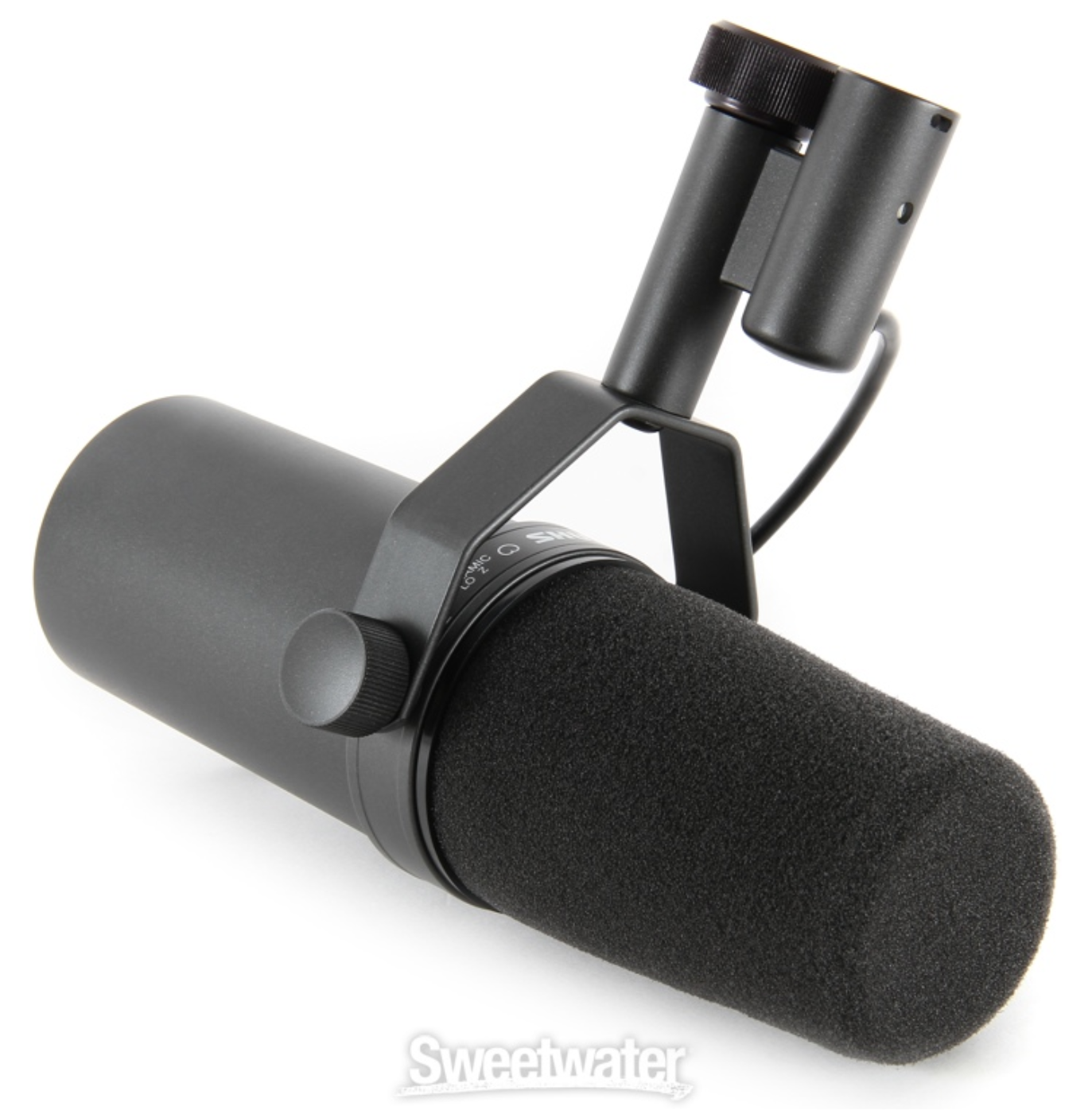
Desktop microphone isolation stand

But, you know, technology marches on. The popularity of podcasting has created a demand for gear that can create a mini-environment for recording on a desktop. If all the noise that reaches the mike is controlled, maybe the entire room doesn't have to be deadened like a real studio.

I'm an audiophile as a consumer, but not as a producer. I can grope my way around an audio editor program like Goldwave because I'm also a fiddler and I needed a tool to clean up workshop recordings, but that's a far cry from being an audio engineer. On the other hand, this is spoken word, not multi-track music.

What's one more learning curve for an indie author and publisher, eh?

I'll have to wait until spring is far enough along that I can shut the furnace down for a couple of hours at a time, but by then I expect to have a portable home studio set up for less than the cost of engaging an audio professional to do the work for me for a single book.

And then I'll start cranking them out.

Writer by day, and narrator by night.

Why your book descriptions don’t look right

Posted in Formatting, and Just for Writers

We go to a lot of trouble to make our book descriptions as good as we can — not just their content, but the way they look. Many of us have learned basic HTML tagging in order to provide formatting for book descriptions as part of our work publishing a book.

As soon as you go beyond the world of Amazon-only, you begin to lose control of what distributors and retailers do to your pretty book descriptions. And it takes special effort to make the book description inside your book look good, too.

Doesn't always work, though. Not all methods are suitable for all situations, and there are limits to what you can control.

As in all such things, the devil's in the details.

(click on any image below to enlarge it)

HTML Markup to use for websites

What I think of as the original text usually appears on the book's product page on your own author and/or publisher websites.

You have complete control over what this looks like.

You can see a simple use of <strong> and </strong> to mark the bold section (same as using <b> and </b>). This was created in WordPress, and the paragraph behavior is instantiated by the underlying WordPress theme (in other words, I didn't need to place paragraph marks <p> and </p> around each paragraph.)

HTML Markup to use for ebook front-of-book blurbs

Ebooks are special packages of HTML files, in a compressed (zip) container. I make my ebooks using Sigil, and each chapter is an underlying file in the container. The opening page shows a book description.

You have complete control over what this looks like, within the limitations of HTML supported by ebooks.

Participating in the book trade

Posted in Distribution, and Just for Writers

All kinds of industries

I've been a business entrepreneur all my life, primarily in the software and IT industries. In addition to building companies, I've had to build a working understanding of other industries and sectors in order to provide services for them: logistics, health care, educational testing, banks, brokerages, and several others. My businesses were small and mid-size, but most of my clients were large Fortune-500 sorts of companies.

I've prided myself on being able to dive into a new-to-me industry and burrow down into its basic gears and levers, so that I can analyze how it works. In many cases, I've had to understand it well enough to create software for it that would cover all situations, and that takes a deep understanding of what can happen.

So when I decided to become an independent author, I was cocky about applying the same acumen to the book trade. After all, I wanted to know all about how it worked and how to match my new business with it successfully. That naive expectation didn't last long.

Here's the problem…