Visit Page
Skip to content

Category: Plot

A defense of popular fiction

Posted in Genre, and Plot

I was reminded today of an excellent essay by G K Chesterton (1901), thoughtfully preserved for us by Martin Ward. Like all such things, the specific references are not necessarily still recognizable, but the core of the essay is both persuasive and witty. Some background on penny dreadfuls here and here.

UPDATE: On the Frank Reade dime novels — some of the earliest Science Fiction.


A Defense of Penny Dreadfuls

G K Chesterton
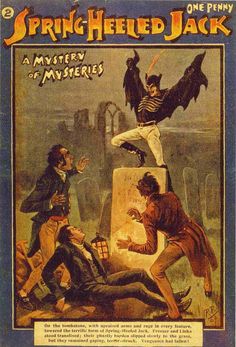
SpringHeeled JackOne of the strangest examples of the degree to which ordinary life is undervalued is the example of popular literature, the vast mass of which we contentedly describe as vulgar. The boy's novelette may be ignorant in a literary sense, which is only like saying that modern novel is ignorant in the chemical sense, or the economic sense, or the astronomical sense; but it is not vulgar intrinsically–it is the actual centre of a million flaming imaginations.

In former centuries the educated class ignored the ruck of vulgar literature. They ignored, and therefore did not, properly speaking, despise it. Simple ignorance and indifference does not inflate the character with pride. A man does not walk down the street giving a haughty twirl to his moustaches at the thought of his superiority to some variety of deep-sea fishes. The old scholars left the whole under-world of popular compositions in a similar darkness.

RobinHoodTo-day, however, we have reversed this principle. We do despise vulgar compositions, and we do not ignore them. We are in some danger of becoming petty in our study of pettiness; there is a terrible Circean law in the background that if the soul stoops too ostentatiously to examine anything it never gets up again. There is no class of vulgar publications about which there is, to my mind, more utterly ridiculous exaggeration and misconception than the current boys' literature of the lowest stratum. This class of composition has presumably always existed, and must exist. It has no more claim to be good literature than the daily conversation of its readers to be fine oratory, or the lodging-houses and tenements they inhabit to be sublime architecture. But people must have conversation, they must have houses, and they must have stories. The simple need for some kind of ideal world in which fictitious persons play an unhampered part is infinitely deeper and older than the rules of good art, and much more important. Every one of us in childhood has constructed such an invisible dramatis personae, but it never occurred to our nurses to correct the composition by careful comparison with Balzac. In the East the professional story-teller goes from village to village with a small carpet; and I wish sincerely that any one had the moral courage to spread that carpet and sit on it in Ludgate Circus. But it is not probable that all the tales of the carpet-bearer are little gems of original artistic workmanship. Literature and fiction are two entirely different things. Literature is a luxury; fiction is a necessity. A work of art can hardly be too short, for its climax is its merit. A story can never be too long, for its conclusion is merely to be deplored, like the last halfpenny or the last pipelight. And so, while the increase of the artistic conscience tends in more ambitious works to brevity and impressionism, voluminous industry still marks the producer of the true romantic trash. There was no end to the ballads of Robin Hood; there is no end to the volumes about Dick Deadshot and the Avenging Nine. These two heroes are deliberately conceived as immortal.

Making all the plot threads meet

Posted in Broken Devices, Plot, and The Chained Adept

PlotMaze

My series, The Chained Adept, began as an exploration in overall writing technique, that is, the dreaded divide between writers who outline (plotters) and writers who fly by the seat of their pants (pantsers).

I'm an old software engineer and company builder, so (as you might imagine) I'm a natural outliner. Say what you will about software — in the end, if you didn't plan (plot) it right, the program won't run.

Of course, for my first series, I found that as an outlined plot progressed, less and less of the original outline was relevant. In the end, all I was really left with were echoes of the original goals and plot inflection points (the inciting moments, the setbacks, the crises, the resolutions, and so forth). So I thought I might as well start with just that much, or at least the end goal, and try the alternate approach.

The great virtue of writing as a pantser is that, if you don't know how it's going to work out as you go along, then neither do your readers, so you're likely to keep surprising them as you surprise yourself.

KickMachineYou have to trust to your subconscious which has read a lot of books in your genre. It's very good at putting together the clues you've already written (inadvertent or not) and speculating about what might come next. Writing becomes more like reading — you write to see how it's going to come out.

Each time you pause and add a bit to what's been written already, your subconscious adds that to the mix and continues to churn. Every now and then, though, I find I have to give my subconscious a good thump — I've put the coins in the machine, but nothing's coming out.

Right now, I'm headed for a big setback in act 3 of Broken Devices. It's not the final crisis, but it's significant. I've got the villains and at least three other sets of characters all headed for the same general area, with good reasons to be there and serious purposes, and I know what the result will be, but the actual paths that will tie them all together are being a bit… elusive. Like the center of that maze above, you can see the goal but you can't get there down any of the existing paths.

My subconscious is doing one of those whirr-thunk, whirr-thunk moments you get when you turn the key and the car doesn't start. I'm going to be stuck here until something shifts. I need some nice mindless tasks so it can churn away and spit out useful choices that don't depend on implausible coincidences.

Conyers, GA - May 21: The streaks of a rider's headlamp make a winding trail through the woods during the Granny Gear 24 Hours of Conyers 24-hour mountain bike race in Conyers, Georgia.

I've been here before and I know it'll sort itself out, but they don't call this approach “writing into the dark” for nothing.


An observation

Posted in Broken Devices, Heroes, Plot, and The Chained Adept

Put your hero in danger and keep them there
Put your heroes in danger and keep them there

So here I am nearing the middle of Broken Devices, and I'm itching to broaden the scope. I mean, we're in Yenit Ping, the biggest city in the world, but it's just not… enough.

Ever notice that if you put your hero in a spot of danger, just a little bit, it has a way of greatly increasing your story options?

We enter the scene with everything all hunky-dory, and we exit… rather differently, as if a wind had blown down all the jackstraws.  Let's see what our heroes (and villains) are going to do about it.

Maps are your friend

Posted in Artwork, Mistress of Animals, Plot, Setting, and The Chained Adept

One hemisphere of the world of the Chained Adept

There's nothing like a good map to keep you honest as you tell your story.

When you want to know if someone can ride from point A to B in one long day, without being mounted on SuperHorse™, then you need to know how close those two points are, and how much terrain a horse can cover in a day.

If you want to create a caravan that will make a regular circuit of more than a thousand miles of territory, better work on your mileage-per-day/days-per-market/days-lost-to-maintenance tables. Not to mention your fodder/grain/grazing capacities on the route vs the needs of the freight-carrying animals.

National or sub-national boundaries typically feature mountains or water hazards, not arbitrary straight lines (the mid-Western and Mountain states of the United States not withstanding).

Now, most of us use scraps of paper with just the bare minimum of information and illegible commentary, but I am cursed with the desire for reusability and just enough computer obsessiveness to want to make a “real” map, with real landscapes, for my fantasy series.

Besides, I can't draw worth a damn anyway, so it might as well be computer-generated.

Need more fuel

Posted in A Writer's Desk, and Plot

So, it's like this, see…

There's this scene that has to be written next, and you kinda know how it's gonna work. This person's gonna do this thing, and that other person, he's gonna do that thing, and then someone's gonna find the whatsis and then…

So you go to sleep on it and your good old subconscious cranks away and, wouldja believe it… when you wake up, the scene in your head's got all sorts a details it didn't have before.

So you write it all down, and it's all good, and you reread it, and you're happy.

And then you look at the word count. One scene, not even a thousand words. And your daily goal is a thousand, hell, two thousand or three sometimes. So you need at least another scene, maybe two, even. And you're all outta puff.

So whaddaya gonna do? Go take another nap and get some more material?

Richard Dadd - the Fairy Feller's Master-Stroke (detail)
Richard Dadd – the Fairy Feller's Master-Stroke (detail)

Out of the darkness, into the light

Posted in Characters, Plot, The Chained Adept, and The Chained Adept

Winding Path (Bob Kimball)

Endings are terrific.

I'm just finishing up The Chained Adept now, having extricated myself from the swamp of my misconceived 3rd act. I love doing endings. I know exactly where I'm going, what's left to do, and what I need to wrap up.

Some genres, and some authors, too, like to end their books with a bang. Kill the villain, defeat the army, save the alien princess — done!

I find that I prefer a bit of a cool down at the end, a reflection on what's happened, perhaps the foundation of a new vector for the next book. My characters need it, a way to recover from peril and stress. (As one of my friends would say with a wink and a leer, “it's just not the same if you don't get to smoke a cigarette afterward.”)

It's the light my characters work toward, whatever form that takes, whatever the darkness that impedes them. They need some of that light at the end to sustain them.

Valar Morghulis

Posted in Characters, Heroes, Plot, The Chained Adept, and The Chained Adept

ValarMorghulis
“All Men Must Die” — The motto of George R. R. Martin's Game of Thrones

We're part way through a multi-day marathon of the entire 5 or 6-season run of Game of Thrones on cable, and it's been on non-stop for the last couple of days, downstairs in this small cabin. Periodically I go and get some lunch or dinner, and make sure my husband is still breathing, in front of the TV.

No doubt about it — this is quality programming, and I've seen all the episodes (and read the books). Upstairs at my writing desk, where I can hear snatches of the dialogue, much of the music, and all of the screaming, I'm having no trouble following along with the episodes as they go by.

This is having two effects on my writing…

I am oh-so-glad that George R R Martin is not the god of my personal universe

When novels first became popular in the 16th/17th century, readers felt that they held up a mirror to life. My opinion is: yes, and no.

Yes, in that the characters must emulate real people, or the story they tell has no foundation, no reality, and is nothing but fable, with puppets moved at whim by the author.

No, in that the author is the god of his created world, and it is only a pretense to abdicate that responsibility. It is not fate that kills his characters, or accident, or evil — it is the author's pen, disclaim it how he may. Even when writing a novelized version of historical events, the author cannot help but take sides, offer explanations, create a reality where the events make some sort of fictional sense. It's his story, and he has shaped it as he wants it.

Lost in the tepid swamp of niceness

Posted in Plot, The Chained Adept, and The Chained Adept

Lost in the swamp

There you are, writing along at a good clip, and suddenly you find your story buried in mud, all its energy lost.

Now, I'm still rather new at this fiction writing life — a bit shy of my first million words. Aside from working on the craft itself, which I enjoy, much of the challenge is understanding your own psychology well enough to control your productivity.

In my case, there are two issues: what to do when the story grinds to a halt, and how to avoid procrastination. Now, I don't know anyone who can successfully discipline their work habits through will alone (if we had that much will, we'd all eat healthy and exercise regularly, not to mention watch our budgets and clean our houses). Most of us are better off coaxing ourselves into a regular routine and lowering all barriers that might derail it.

Alas, I have an alarm system that slams a wall down in front of my creativity when it senses “wrong path taken” for the story. I push my way forward from that point with great difficulty and at my peril, and I've found it's always a mistake to do so.